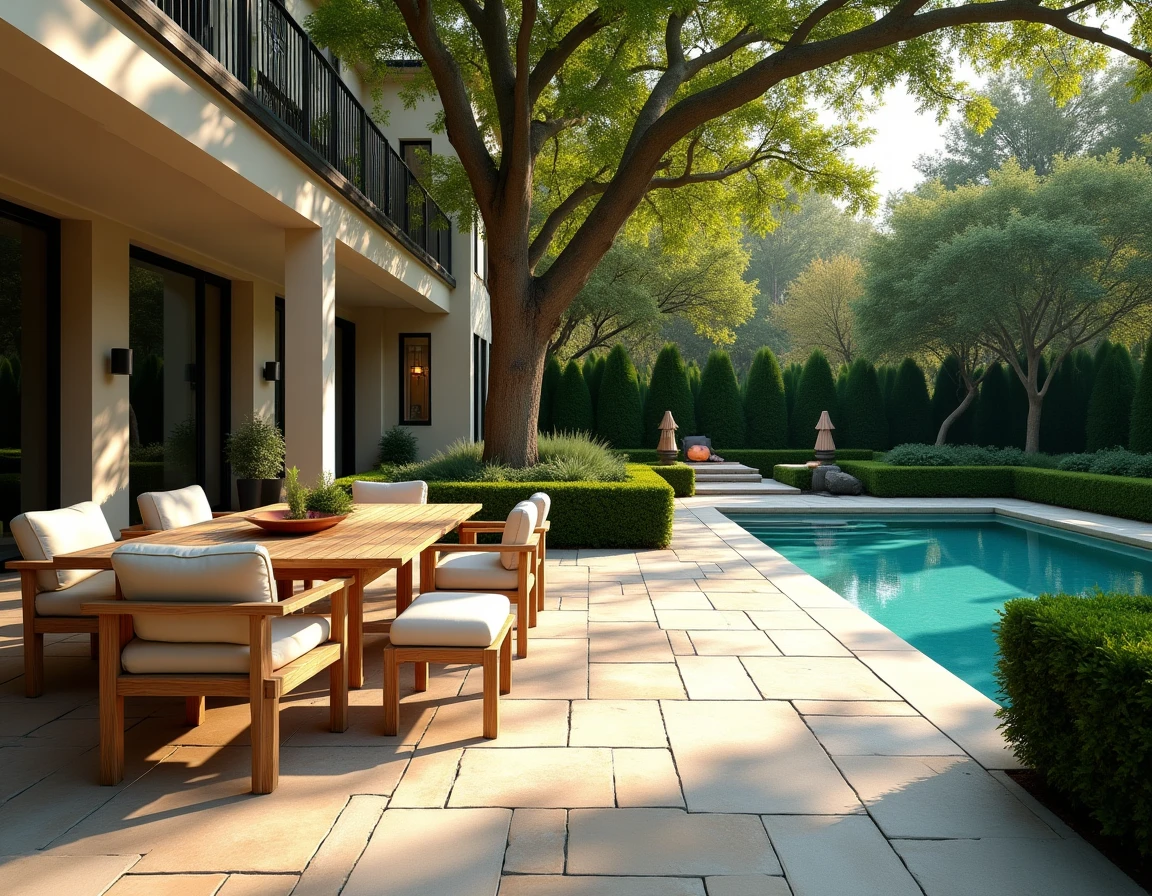
A high-end outdoor layout refers to a project where each component (terrace, plants, lighting, pond) is custom-designed, using durable materials and meticulous implementation. The overall budget depends less on a generic price per square meter than on the interaction between the land, the chosen structures, and local regulatory constraints.
Stormwater Management: The Invisible Item That Conditions the Entire Project
Even before choosing a natural stone or a type of wood, the rain zoning of the municipality may impose infiltration or retention of rainwater on the plot. This obligation, stated in the PLU, limits the proportion of impermeable surfaces and guides the design from the initial sketch.
Specifically, a large terrace made of jointed slabs or a paved path increases runoff. If local regulations require compensation, it will be necessary to integrate an infiltration well, a landscaped swale, or a retention pond. These hydraulic management structures represent an additional cost often absent from initial quotes, as they are only identified after soil study and consultation with the urban planning department.
Consulting the rain zoning and the PLU before sizing mineral surfaces helps avoid resizing during construction. This is a detail to address very early in the planning, especially to compare outdoor services on L’Esprit Nature with the specifics of your land.
Materials and High-End Terrace: What Affects the Price Per Square Meter
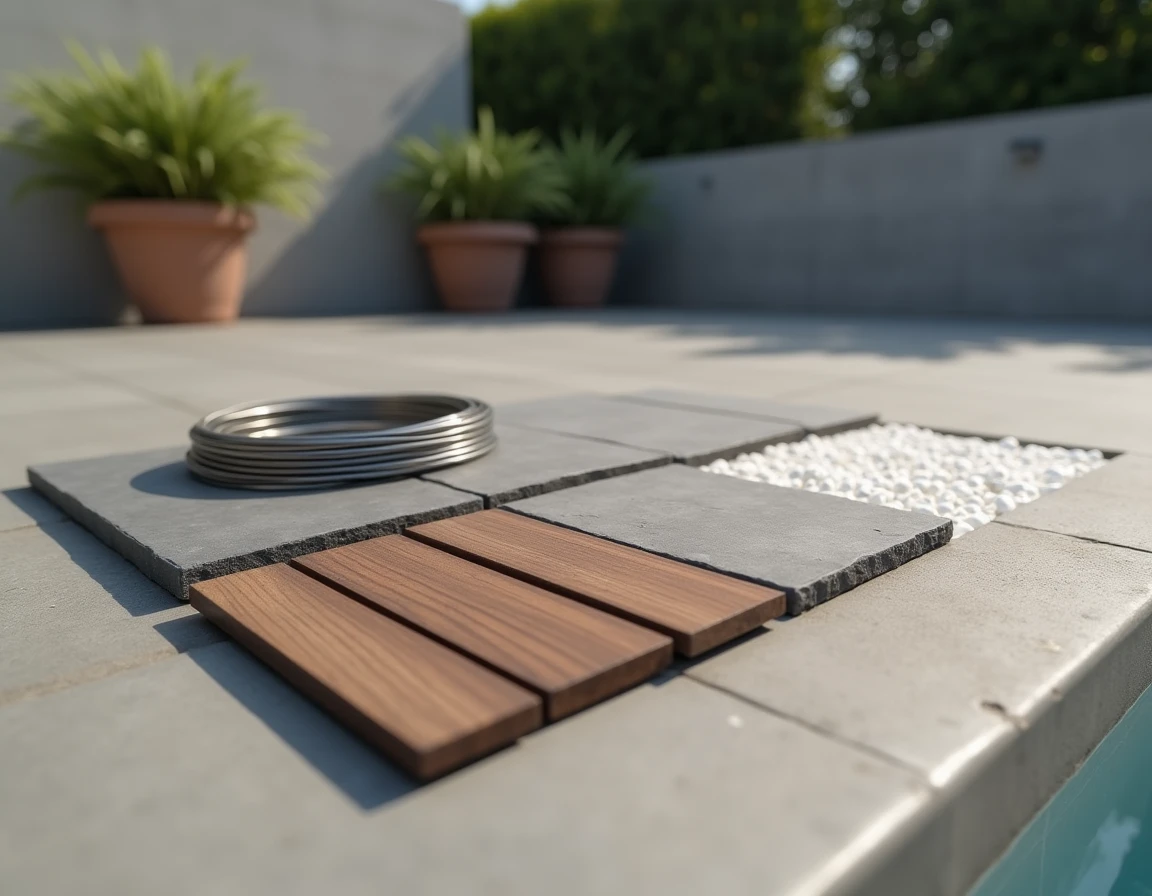
In a premium outdoor layout project, the choice of materials carries significant weight. Natural stone (travertine, granite, slate), certified exotic wood, or high-density composite resin do not have the same purchase cost, nor the same installation cost.
The price of a high-end terrace can vary from one to three times depending on the chosen material, the complexity of the layout, and the soil preparation. For example, excavation on sloped land requires digging and sometimes rock filling, which significantly increases the cost beyond just the surface covering.
Items to Distinguish in a Terrace Quote
- The excavation and soil stabilization, whose cost depends on the nature of the land (clay, rocky, sloped) and the volume of earth to be removed.
- The supply of materials: a slab of natural stone costs significantly more than standard outdoor tiles, but ages better over several decades.
- Specialized labor: installing irregular paving or a complex pattern requires expertise that reflects on the hourly rate of the landscaper or mason.
- Finishes and connections (skirting boards, stair nosing, drainage joints), often underestimated in initial estimates.
Requesting a detailed quote that clearly separates each item remains the only way to identify budgetary leeway.
Vegetation and Irrigation: Budgeting for Resilience, Not Just Aesthetics
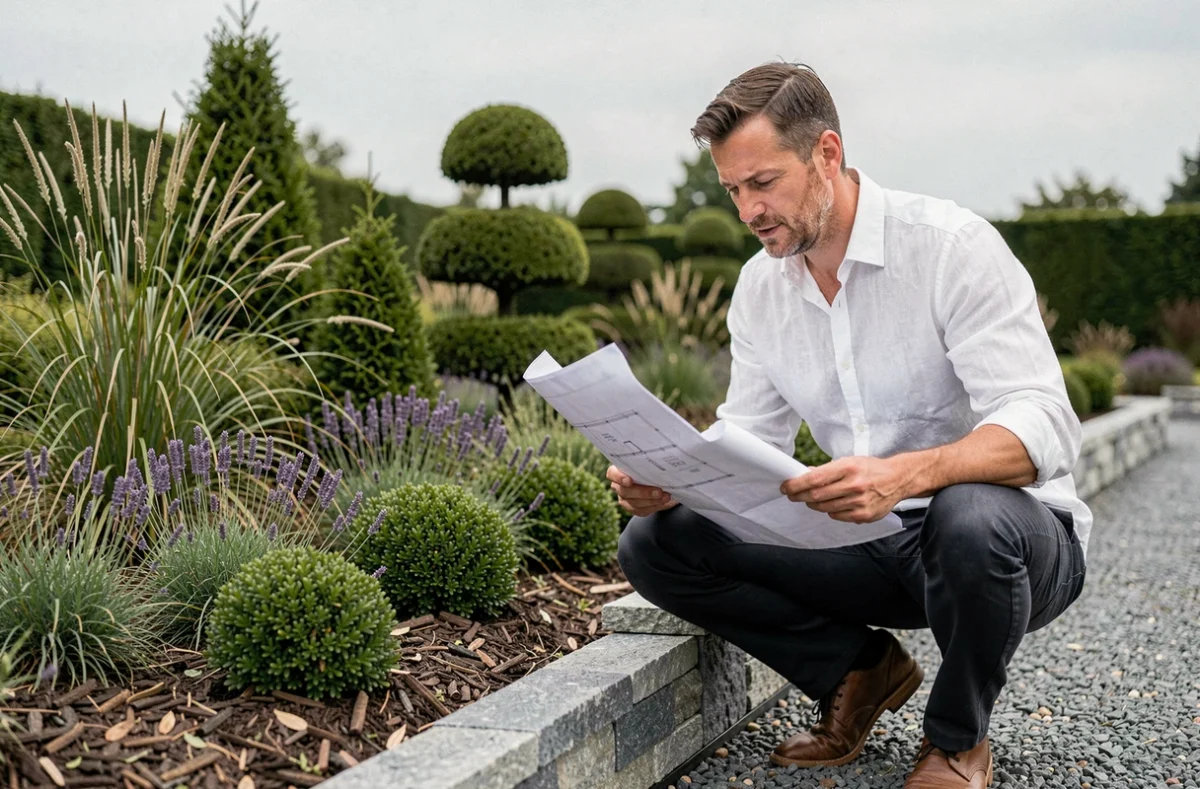
A high-end garden relies on a plant scenography designed in volumes, textures, and staggered blooms. Large plants (olive trees, evergreen oaks, palms depending on the climate) cost significantly more than young plants but provide immediate results.
The choice of drought-resistant plants reduces dependence on irrigation and protects the investment. During water restriction periods, prefectural orders may prohibit the irrigation of private green spaces. A bed of Mediterranean grasses or a dry garden will withstand these episodes without damage, whereas an English lawn will require regular and costly watering.
Rainwater harvesting (buried tank connected to the irrigation network) constitutes an additional investment at installation but secures maintenance in the long term. This item logically integrates into the overall budget from the creation phase.
Development Tax and Permits: Administrative Costs to Anticipate
Certain installations common in a high-end outdoor layout (swimming pool, pool house, garden shed over five square meters) are subject to prior declaration or building permits. The development tax then adds to the cost of the work, with an amount that depends on the taxable area and the rates voted by the municipality and the department.
This tax is sometimes overlooked in initial estimates. For a swimming pool, for example, it is calculated based on a flat rate per square meter of pool, multiplied by local rates. The amount can reach several thousand euros depending on the location.
Checks to Conduct Before Starting the Project
- Consult the urban planning department of the town hall to identify the required permits and processing times.
- Request a simulation of the development tax on the official site dedicated to the calculation, by providing the nature and area of the planned structures.
- Check if the land is located in a protected area (ABF, classified site), which may impose specific materials or colors and increase the budget.
Incorporating local taxation into the projected budget avoids unpleasant surprises once the quote is signed.
Landscaper Fees for a High-End Project: Architect or Craftsman
The hourly rate of a gardener-landscaper and that of a landscape architect do not cover the same services. The former carries out planting, excavation, and installation work. The latter designs the overall plan, coordinates the trades, and oversees the project.
For a high-end project, involving a landscape architect from the design phase allows for optimizing volumes, anticipating technical constraints, and controlling the overall budget. Their fees generally represent a percentage of the total cost of the work, which aligns their interests with the successful execution of the project.
A complete landscaping project at a high-end can significantly exceed the cost of a standard layout, but the difference lies as much in the quality of the design as in that of the materials. The durability of the structures and low maintenance in the long term partially offset the initial investment.
The actual cost of a high-end outdoor layout cannot be read from an average pricing grid. It is constructed item by item, intersecting the constraints of the land, local regulations, and material choices. The most reliable quote remains the one that details each line, including development tax.