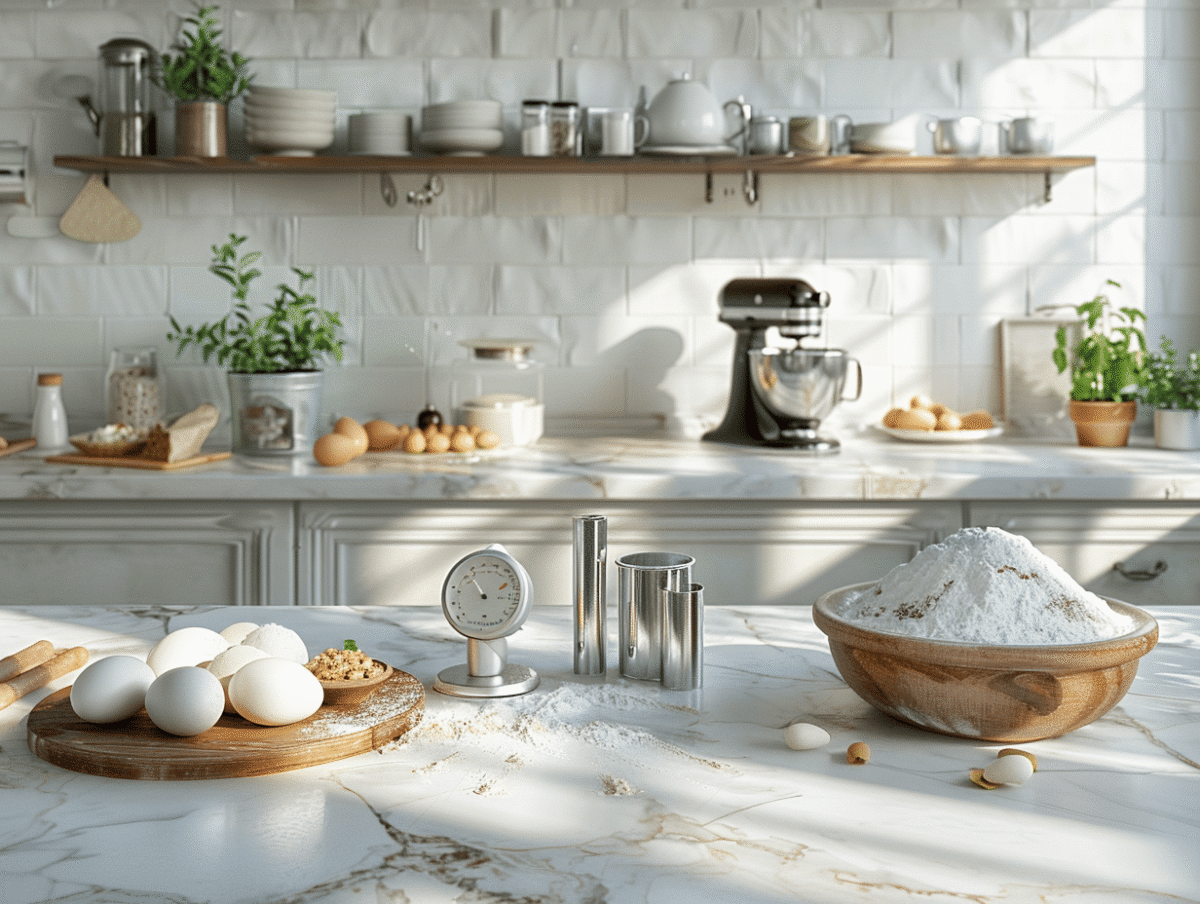
In the culinary universe, precision is the key to success. Whether you are a pastry enthusiast or a sauce maestro, understanding the subtleties of measurement conversion is essential. Volume, mass, and temperature are the pillars of any recipe. A tablespoon too much or an improperly adjusted temperature can turn a fluffy cake attempt into a culinary disaster. Mastering these conversions not only allows you to follow recipes to the letter but also to adapt creations from elsewhere to our local utensils and ovens, thus transcending the boundaries of gastronomy.
Mastering Measurement Conversions in Cooking: Volume, Mass, and Tips
At the heart of the kitchen, measurement conversions prove to be invaluable allies. Understanding how to convert ml to cl, or g to kg, is a skill that transcends the mere execution of recipes; it contributes to the creation of precise and controlled cooking. A teaspoon, though modest, holds 5 ml of liquid, which is also the amount of salt, sugar, or oil it can accommodate in terms of weight. The accuracy of measurements then becomes a symphony where each note plays its role with precision.
The utensils of everyday life become practical measuring instruments. A tablespoon, representing 15 ml, can hold, for example, 12 g of butter or oil, 15 g of salt or sugar, and up to 20 g of granulated sugar or coarse salt. A tea cup, on the other hand, is equivalent to 20 cl and can serve as a reference for measuring 100 g of flour. These simple correspondences allow for easy navigation between volume and mass, sidestepping the pitfalls of different ingredient densities.
Accuracy in the conversion of measurement units is a cornerstone of precision cooking. Consider that 1 liter in grams can vary depending on the substance: water, a universal ingredient, creates a bridge between volume and mass measurements with a perfect equivalence of 1 liter for 1000 g. This parity is not universal, and nuances must be taken into account. Remember that 1 cl equals 10 ml, and that 100 g converts to 0.1 kg, allowing you to juggle between small quantities for seasonings and larger ones for the bases of our dishes. Take this knowledge, integrate it, and the precision of your measurements in cooking will become second nature, opening the door to creations that are as accurate as they are delicious.
Understanding and Applying Temperature Conversions for Perfect Cooking
In the sacred realm of the kitchen, temperature is a delicate and decisive factor. Mastering temperature conversions is essential to ensure cooking that respects the subtleties of each food. The kitchen thermometer becomes a compass, guiding chefs through degrees Celsius and Fahrenheit. The conversion is simple: to convert Celsius to Fahrenheit, multiply the temperature in degrees Celsius by 9, divide by 5, then add 32. Conversely, subtract 32 from the temperature in degrees Fahrenheit, multiply by 5, then divide by 9.
Thermal precision requires strictly following temperature indications, whether searing meat over high heat or simmering a stew over low heat. International recipes, often marked by Anglo-Saxon influence, require assured conversion to avoid cooking errors. An oven preheated to 180 degrees Celsius requires particular attention to be adjusted to 350 degrees Fahrenheit, thus ensuring fidelity to the original instructions and the success of the dish.
The details of cooking temperature influence the texture, flavor, and even the safety of the prepared dishes. Understand the interactions between heat and chemical reactions, such as caramelization or the Maillard reaction, and you will transform raw ingredients into harmonious culinary creations. Pastry chefs, in particular, juggle these degrees to achieve fluffy cakes and crispy meringues. Temperature, this invisible yet tangible line between failure and excellence, must be tamed by every cook in pursuit of perfection.