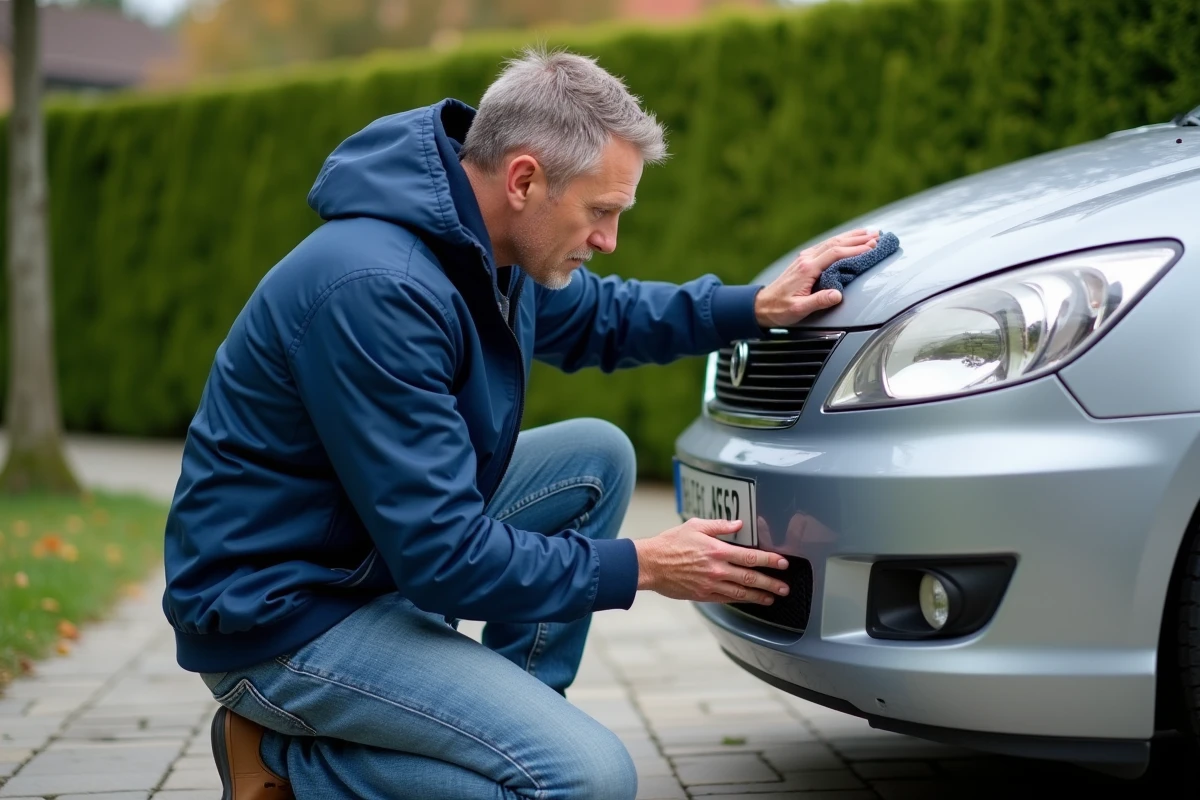
The scratch on a plastic bumper does not respect the age of the vehicle or the care taken with its bodywork. In just a few seconds, a mark appears, often from a simple rub. The good news is that there are solutions accessible to everyone, without having to go through an expensive garage.
Everyday products are sometimes enough to fade or even eliminate these unsightly marks on plastic. The key is to act carefully, or risk worsening the situation by aggravating the initial scratch.
Why do plastic bumpers scratch so easily?
Plastic bumpers are now found on most vehicles, a choice motivated by their lightness and ability to absorb minor everyday shocks. However, this flexibility conceals a weakness: a plastic bumper scratches at the slightest clumsiness, whether it’s a shopping cart a bit too enthusiastic in the parking lot or a bag slipping at the wrong moment.
While steel and aluminum sometimes withstand scratches better, plastic, being less dense, suffers from micro-scratches and deep scratches. Therefore, a plastic bumper often means a collection of scuffs, visible or not.
Here are some examples of scratches that often affect the lower body:
- Superficial scratch: a fine, shallow mark that can sometimes be removed with a well-aimed cloth.
- Deep scratch: a clear cut in the material that can even cause the plastic to crack or chip locally.
- Micro-scratch: discreet but numerous marks that are responsible for the dull appearance that eventually appears on the bumper.
All these little damages eventually lead to the desire to erase a scratch on a plastic bumper without an appointment with a professional, especially when the scratch remains moderate. Distinguishing the type of damage often allows for DIY action and saves on costly repairs.
Simple and accessible methods to restore the look of your bumper
For superficial scratches, miracles can often be achieved with very little. Toothpaste, thanks to its micro-abrasives, is applied in circular motions with a microfiber cloth: it polishes the mark and quickly reduces it. One can also opt for clay bar or, for those who still have it, a bit of cigarette ash on a cloth.
When the scratch is more pronounced, using a very fine sanding paper (like P2000) is preferable. The key: sand gently while frequently checking the result. A special body filler is used to fill deeper cuts, while epoxy resin takes over if the plastic is really damaged. Once the product is dry, simply smooth it out and finish with a touch of paint or clear varnish.
For those who prefer impeccable finishes, there is the plastic polish option. This product, applied with a soft cloth, removes small residual scratches. Unlike other methods, it provides a uniform and slightly satin finish. When it comes to temporarily masking a scratch on dark plastic, for example while waiting for a sale, a bit of vegetable oil or a mixture of white vinegar and olive oil can create an illusion until the next technical inspection.
Be careful, the heat gun technique is akin to goldsmithing. Heating the plastic surface theoretically allows it to rise, but any excess leaves an irreparable mark. Unless experienced, it’s better to avoid it.
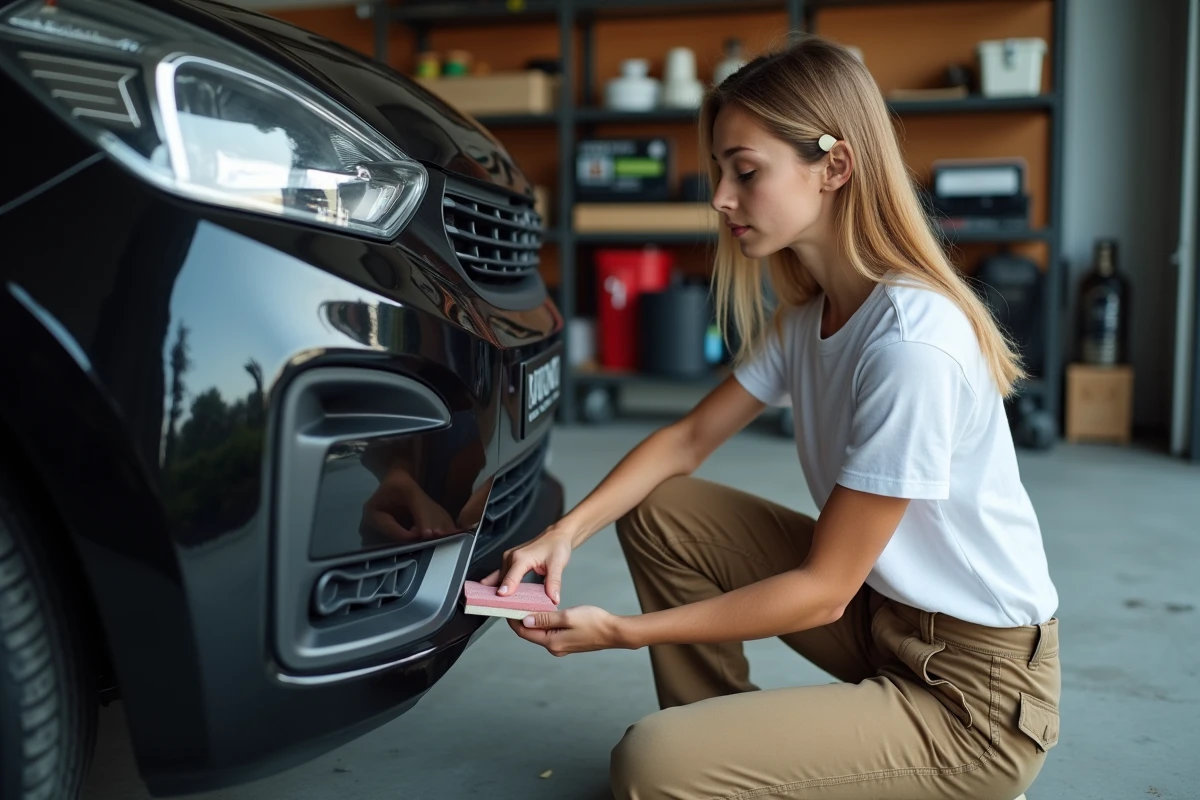
Preserving the appearance of the bumper is all about routine
To limit the appearance of scratches, regularly washing the bumper with mild products and a microfiber cloth is essential. This action prolongs the shine and prevents the embedding of micro-abrasive particles.
Continuing protection sometimes involves applying a plastic renovator. This product restores the original color and leaves a protective film against dust and road splashes. Some renovators also prevent water and dirt from adhering permanently.
For truly at-risk areas, applying a clear protective film is an effective solution. This film acts as a discreet barrier against everyday aggressions. It takes a bit of time to install correctly, but once in place, the shield effect is very real, and repairs can be postponed or even avoided.
If the scratch goes beyond a simple mark or if a crack appears, it’s better to consult a body shop: an experienced eye will be able to diagnose the extent of the damage. Sometimes, certain car insurance extensions may cover the repair, provided you have maintenance or intervention invoices.
Finally, don’t wait for a disaster to monitor the condition of the bumper. Inspect it regularly, maintain it with suitable products, and get into the habit of cleaning without unnecessary scrubbing. These simple actions make all the difference in the long run.
Keeping a bumper in pristine condition means having a car that ages better and still reveals a certain pride behind the wheel. Everyone has their method, but one certainty remains: daily vigilance changes everything.