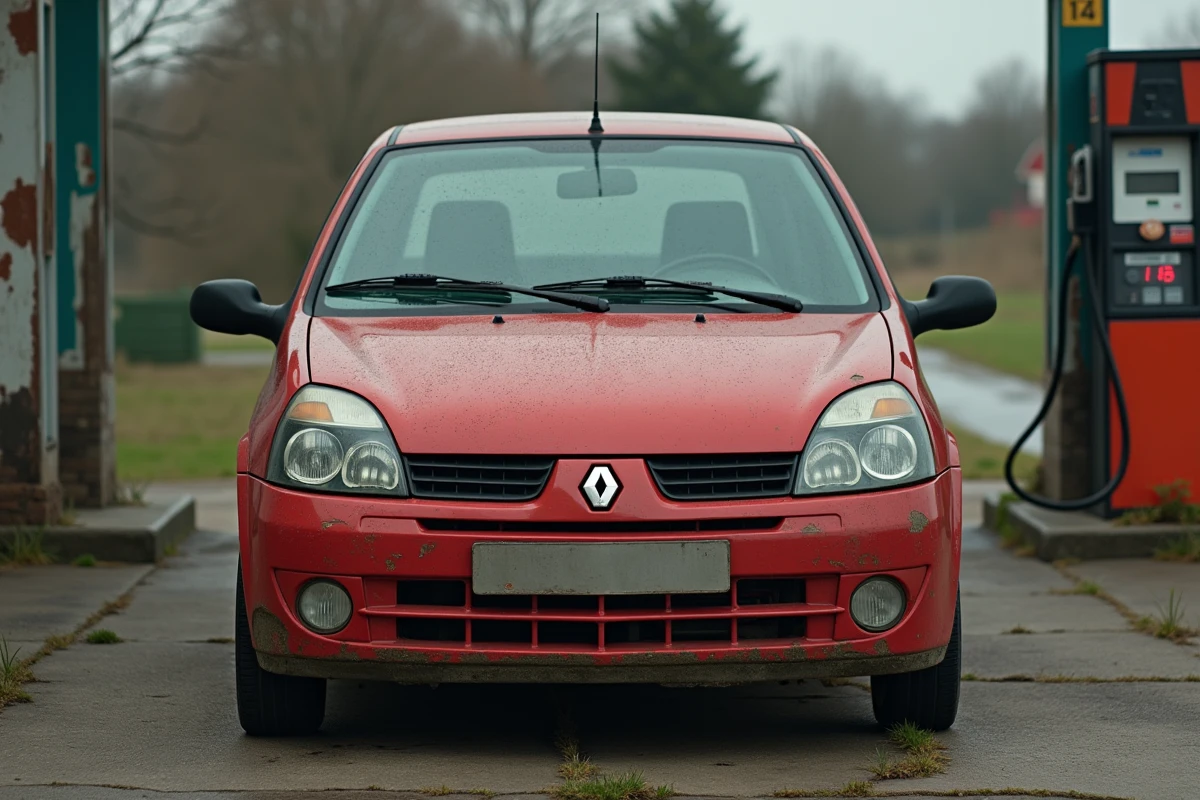
The reserve light comes on the dashboard of your Clio 2, and the next gas station seems far away. Before giving in to panic, it’s important to understand what this warning light actually means: how many kilometers are truly left in the tank, and especially, what factors can surprisingly affect this distance?
SP95, E10, and additives: what really changes for the Clio 2’s reserve
Have you noticed that your fuel consumption fluctuates depending on the fuel chosen at the pump? In a Clio 2 petrol, the type of fuel directly influences the distance traveled on reserve. The classic SP95 and the SP95-E10 do not contain the same proportion of ethanol. The E10 incorporates a higher share of ethanol, an alcohol with a lower calorific value than pure gasoline.
In practice, the E10 leads to slightly higher consumption than the SP95. Over a full tank, the difference remains modest. On reserve, where every deciliter counts, it can represent a few kilometers less. To delve deeper into the issue of the reserve autonomy of the Renault Clio 2, several mechanical parameters also come into play.
Renault recommended the occasional use of anti-fouling additives in the fuel system for the Clio 2. These products aim to keep the injectors and the injection rail clean. Gradual fouling increases fuel consumption, which reduces the remaining autonomy when the light comes on. Using a cleaning additive every few tanks helps maintain optimal engine performance, thus maximizing every remaining liter in reserve.
Real autonomy on reserve: the difference between city, road, and highway
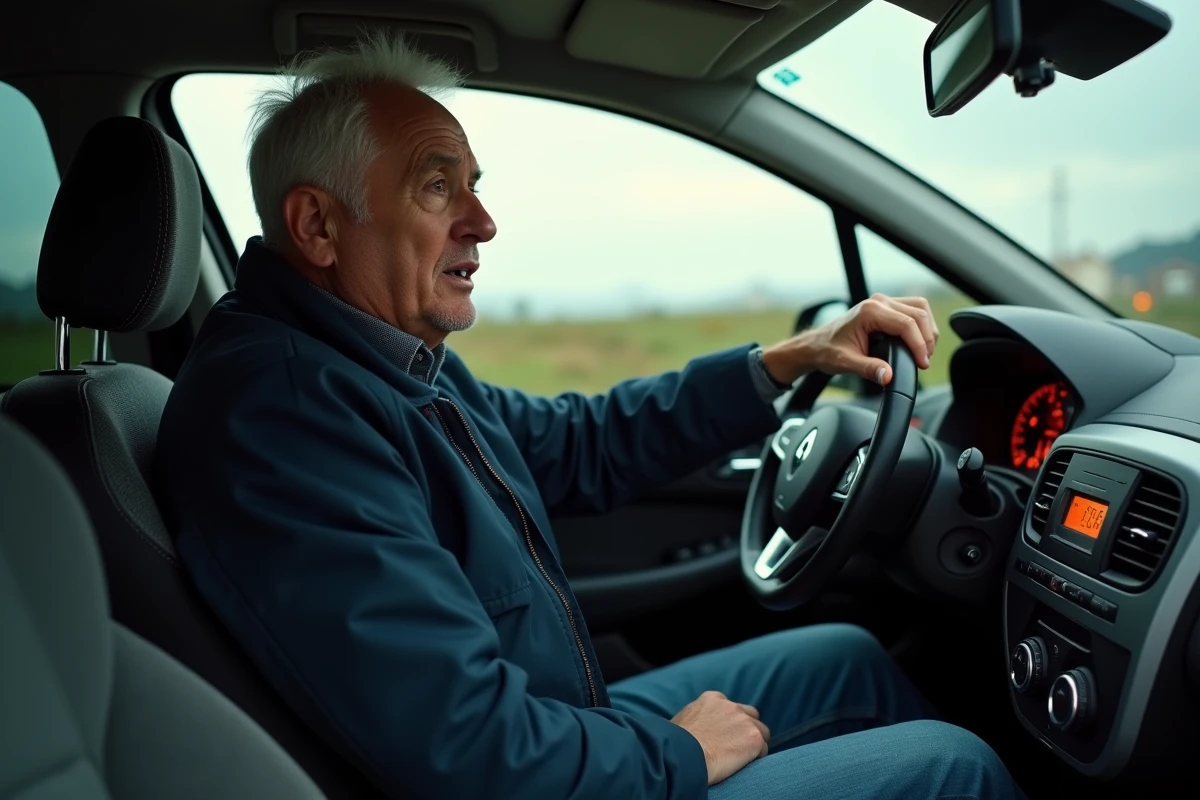
The reserve light on the Clio 2 activates when there are a few liters left in the tank. The distance you can still travel then depends almost entirely on your driving style and the type of road.
In the city: the most favorable scenario
At low speeds, with frequent deceleration phases, consumption remains contained. The Clio 2 petrol, under these conditions, offers its best reserve autonomy. Stops at traffic lights and moderate driving phases allow you to get the most out of every drop of fuel.
On the highway: autonomy drops significantly
Feedback from Clio 2 users indicates a significant decrease in reserve autonomy on the highway, sometimes lower than what one might expect in the city. Driving at high speeds markedly increases consumption. If the light comes on while on the highway, the top priority is to reach the next service area without delay.
Departmental road: an intermediate compromise
Between the city and the highway, secondary roads offer a more stable engine regime. The departmental road remains the best compromise to conserve your reserve and reach a station without excessive stress.
Clio 2 petrol or diesel on reserve: a real gap
If you’re hesitating between two used Clio 2s, one petrol and the other diesel, know that the engine type changes the game regarding the reserve. According to field comparisons, the 1.5 dCi versions offer a reserve autonomy that is 20 to 30% higher than the petrol versions, thanks to inherently lower consumption.
This is not a detail for drivers who regularly travel in rural areas, where gas stations are spaced out. In a petrol model (1.2 or 1.4), the reserve autonomy remains more limited, and driving habits weigh more heavily in the equation.
Mechanical risks of regularly driving on reserve in the Clio 2
Driving on reserve occasionally does not pose a major problem. However, making it a habit exposes the engine and fuel system to several concrete risks:
- Premature wear of the fuel pump: submerged in the tank, it uses fuel as a lubricant and coolant. A level that is too low causes it to run partially dry, which accelerates its aging.
- Intake of impurities: deposits and sediments accumulate at the bottom of the tank over the years. Driving on reserve increases the risk of sending these residues to the fuel filter and injectors.
- Risk of running out of fuel with engine stalling: beyond the discomfort, running out of fuel in the Clio 2 may require priming the system, especially in injection versions.
Cases of fuel pump failures in Clio 2 phase 2, linked to repeated driving on reserve, are regularly reported on technical forums dedicated to Renault.
Practical reflexes when the reserve light comes on
Rather than trying to beat a distance record, a few simple gestures can help you gain the necessary kilometers to reach the next station:
- Gradually reduce speed: each speed reduction measurably decreases consumption.
- Turn off the air conditioning and non-essential electrical consumers: they put a strain on the engine and increase consumption.
- Adopt a smooth driving style without sudden accelerations: maintain a low and constant engine speed.
- Avoid stopping and restarting unnecessarily: each restart consumes more than continuous low-speed driving.
The reserve light is not a signal for panic, but a firm reminder that you need to reach a station quickly. In the Clio 2, the remaining margin depends too much on variables (fuel, driving, engine condition) to be taken as certainty.
Keeping your tank above a quarter remains the best habit to preserve the fuel pump and avoid unpleasant surprises. In a vehicle around twenty years old like the Clio 2, prevention always costs less than repairing the fuel system.