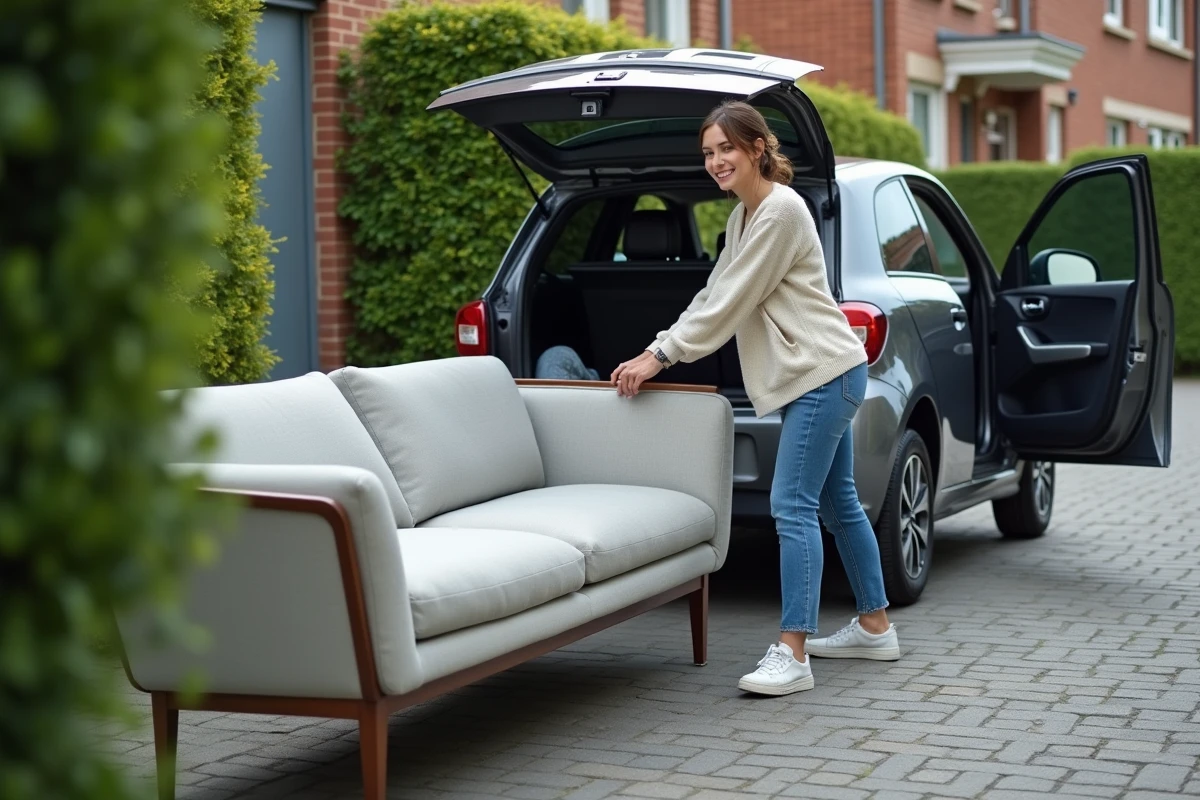
A wardrobe fits, a table finds its place, but a sofa often refuses to comply with the constraints of transport. Manufacturers ignore any universal standard, each model displays its own dimensions, and suddenly, the utility vehicle proves to be too short or too narrow. Add to this sometimes strict insurance clauses: some companies exclude any compensation if a piece of furniture extends beyond the cabin, even if securely tied down.
The rules of the highway code allow, in very exceptional cases, a rear overhang limited to three meters. But the slightest error in securing or a missed signalization and the penalty falls, not to mention the skyrocketing risk of an accident.
Why transporting a sofa in a car can quickly become a headache
With dimensions that exceed the ordinary and sometimes narrow access points, moving a sofa to the back of a vehicle quickly turns into a test of strategy and patience. Even a large minivan is not always enough to accommodate a massive backrest or rigid armrests. Facing the transport of bulky furniture requires precise preparation, with the temptation to abandon any idea of simplicity in favor of inventiveness.
Giving up renting a proper truck forces you to deal with very real constraints: winding hallways, narrow stairs, too-small doors. The slightest miscalculation, and the project turns into a puzzle, with the sofa stuck or unexpected scratches on the bodywork.
To anticipate the pitfalls, it’s better to rely on proven advice. On this page, how to transport a sofa in a car, you will find all the best practices that prevent many disappointments when loading your furniture. Taking the time to measure every corner of the sofa and the vehicle, checking the height of the trunk, preparing each handle and angle, all of this makes a difference in the end.
The reflexes to keep in mind before you start:
- Carefully check the measurements of the sofa and the cabin to avoid any unpleasant surprises when loading.
- Consider disassembling certain parts (legs, cushions, armrests), which can sometimes create just enough space.
- Visualize the route through narrow areas: elevator, staircase, doors, everything must be anticipated.
Missing one of these steps exposes you to a painful transport, or worse: a maneuver that you have to interrupt mid-flight.
What equipment and tips really facilitate moving without hurting yourself
Lifting a heavy sofa is not something to improvise. Besides the risk to your back, the entire logistics of the move can go awry if you start poorly equipped. Relying on appropriate moving equipment makes all the difference: sliding pads under the sofa’s feet allow for smooth movement without having to lift it at every move on flat ground.
Protecting every exposed surface also matters: thick cover, old blanket, or plastic wrap, everything is good to avoid snagging on the fabric. Non-slip gloves ensure a good grip, even in tight passages. As for lifting straps, they effectively distribute the weight among several people and offer much more stability, especially on stairs.
Prepare the route inside the home, open all the doors wide, and ensure nothing obstructs progress. A useful reminder: before moving the sofa, secure the removable parts, footrests, or cushions, to eliminate any risk of falling during handling.
Here’s a series of practical tips to adopt without hesitation:
- Place pads or old towels under each foot to limit effort when moving on smooth floors.
- Generously cover the furniture to avoid snags or scratches, especially in the presence of children or pets that might come to play around.
- Use lifting straps to navigate the most delicate areas like stairs or tight turns without fatigue.
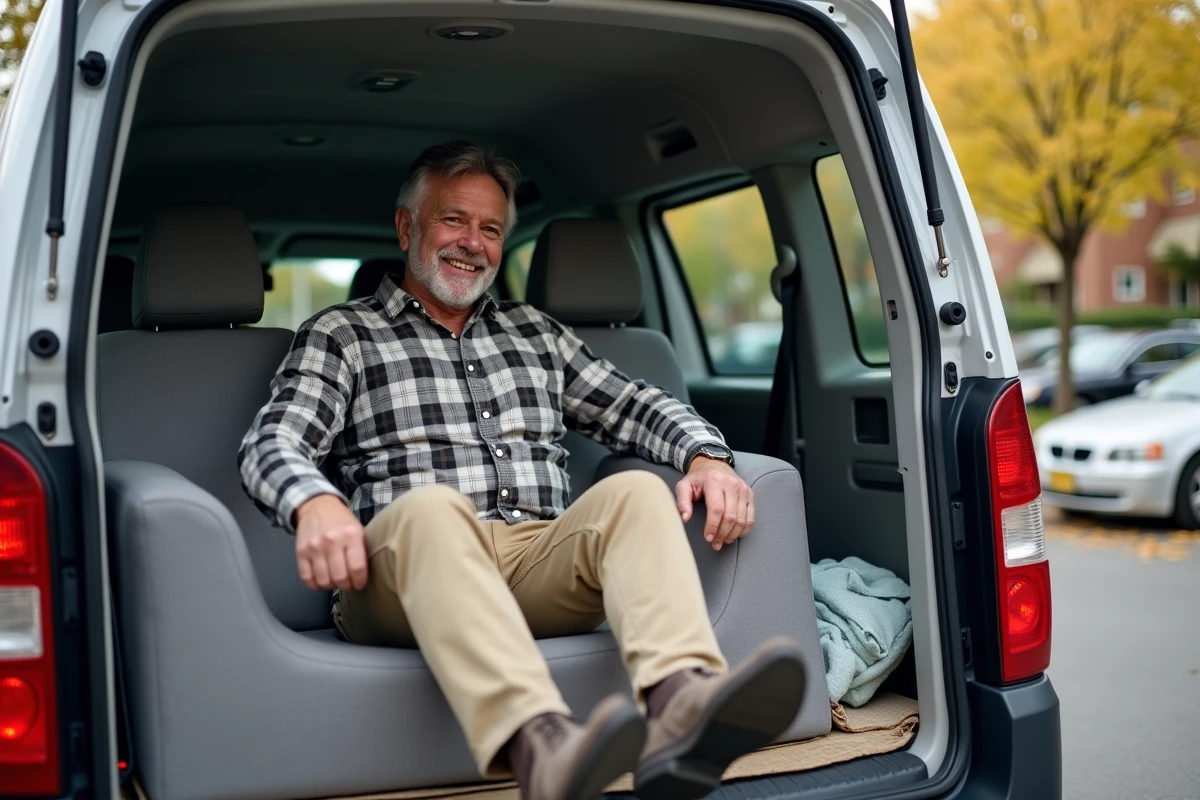
Concrete steps to load, secure, and transport your sofa without stress
Prepare the interior of the vehicle first: measure once again, disassemble what can be (legs, armrests, cushions) to reduce the size to the bare minimum. A bag or box for storing screws and loose parts prevents small losses during unloading.
For the actual loading, ideally, gather at least two people. Tilt the sofa, gently orient it to pass through the openings. Once in the vehicle, if possible, place a protection under the furniture, blanket, flat cardboard, to protect both the floor and the covering. Then securing the sofa with ratchet straps or sturdy bungee cords ensures its stability throughout the journey.
When positioning, think of these gestures that really simplify the task:
- Place flat boxes under the sofa to avoid friction or unwanted marks in the vehicle.
- Use cushions or bags of clothes to fill gaps and prevent the furniture from sliding or moving with every turn.
- Before starting, check the rear visibility from the driver’s seat.
Once on the road, take the time to adjust your speed and be extra cautious at intersections or slowdowns. A sofa, even securely fastened, is never safe from slight movement over a speed bump or during sudden braking. Sometimes it only takes an unanticipated angle to destabilize the whole setup. Stay vigilant until the very last minute of the journey.
Upon arrival at your destination, the relief is often accompanied by a little pride: everything is in place, the bodywork has not suffered, and the sofa is ready to live a second life, far from the stress of transport. Another challenge met, and the satisfaction intact of having successfully completed the mission, against all odds.