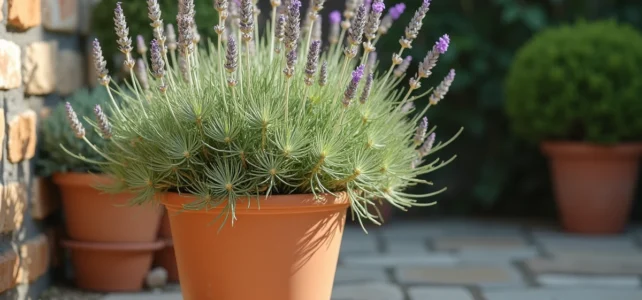
A clump of lavender that collapses in a bed or pot, with stems lying on the ground and limp foliage, raises a question that many gardeners encounter without finding a clear answer. Lavender is a Mediterranean plant adapted to drought, which directs the diagnosis towards specific causes, often related to excess rather than deficiency.
Phytophthora and stolbur: the pathologies that amateur gardeners ignore
Online competitors almost all point to excessive watering or poorly drained soil. These factors exist, but they mask a more concerning phenomenon: the progression of root and vascular diseases on lavender, even in private gardens.
Read also : How to Manage Your Online Academic Messaging: Tools and Tips to Know
Trials conducted by INRAE and CNRS as part of the lavender decline program show that more frequent and intense rain episodes in spring increase the risk of root rot caused by fungi of the genus Phytophthora or Armillaria. The clumps gradually collapse, even in soils reputed to be well-drained.
At the same time, health bulletins from FREDON PACA have reported since 2022 a marked increase in phytoplasma decline (stolbur) on lavender. The first visible symptoms are stems that soften and lie down, followed by generalized yellowing. FREDON recommends systematic reporting of these symptoms in gardens near lavender production areas in Provence.
See also : Everything You Need to Know About Pets: Tips, Care, and News
Identifying the difference between a simple excess of water and a fungal or phytoplasma infection radically changes the course of action. An adjustment in watering will not save a plant affected by stolbur.
Excess water and soil drainage: the basic diagnosis for a collapsing lavender
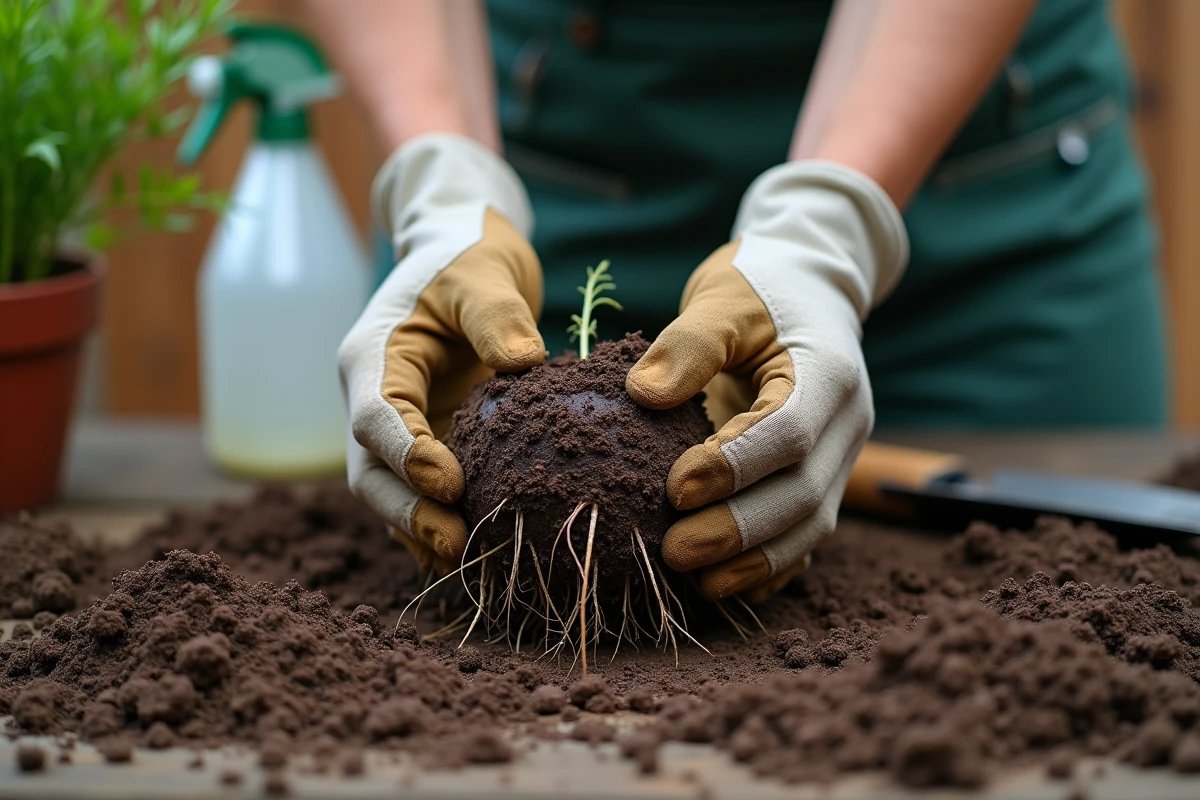
When trying to understand the causes of a collapsing lavender, the first reflex is to examine the substrate and the frequency of watering. Lavender originates from sandy, poor, and dry soils. Reproducing these conditions is the basis for its successful cultivation.
A clay soil, a planting mix too rich in organic matter, or a pot without sufficient drainage holes create a hostile environment for lavender roots. Standing water around the roots causes rapid softening of the stems, which then lie down under their own weight.
The common trap in open ground: a raised bed well-drained on the surface, but sitting on a layer of compact clay below. Water accumulates underneath without the gardener noticing. A simple test is to dig about thirty centimeters after rain to check if water is pooling.
Here are the warning signals related to excess moisture:
- The stems lie down but remain green at first; the foliage only yellows after several days of continuous exposure to moisture
- The base of the plant emits a musty odor or shows visible blackening at the collar
- The substrate remains moist to the touch more than two days after the last watering or rainfall
Potted lavender: magnesium and iron deficiencies related to urban substrate
A scenario that most gardening guides do not address: lavender grown in containers or window boxes, with commercial potting soil and hard water for irrigation. Soil analyses presented at the 2023 Angers Plant Days reveal a rise in magnesium and iron deficiencies in potted lavender in urban environments.
Peaty potting mixes, very common in garden centers, retain more moisture than mineral soil. Combined with hard water that blocks iron absorption (iron chlorosis), they cause drooping foliage and soft stems, even when watering is not excessive in volume.
The visual result resembles excess water, which leads the gardener to reduce watering when the problem is nutritional. The solution involves partially replacing the substrate with coarse sand or pumice, and possibly adding chelated iron if the foliage shows characteristic interveinal yellowing.
Too fertile soil and neglected pruning: two mechanical factors of collapse
A soil enriched with compost or nitrogen fertilizers stimulates rapid growth of lavender stems, which become long, flexible, and unable to stand upright. Lavender grows better in poor soil than in fertile soil. This is counterintuitive for a gardener used to feeding their plants.
The absence of pruning plays a direct mechanical role. A lavender plant not pruned for two or three years develops a bare woody center, with all the vegetation concentrated at the tips. The weight of the foliage and flowers causes the clump to open outward, creating that characteristic “flattened” appearance.
Annual pruning, done after flowering, maintains a compact habit and prevents branches from lying down. It should remain above the old wood, without cutting into the non-leaved parts of the stem, lest it compromise regrowth.
- Prune every year after flowering by shortening the current year’s growth by a third, never into the old wood
- Do not amend the soil around the lavender with compost or manure; a poor, calcareous soil is more suitable
- In pots, replace the regular potting mix with a draining mix (sand, gravel, pumice) making up at least half the volume
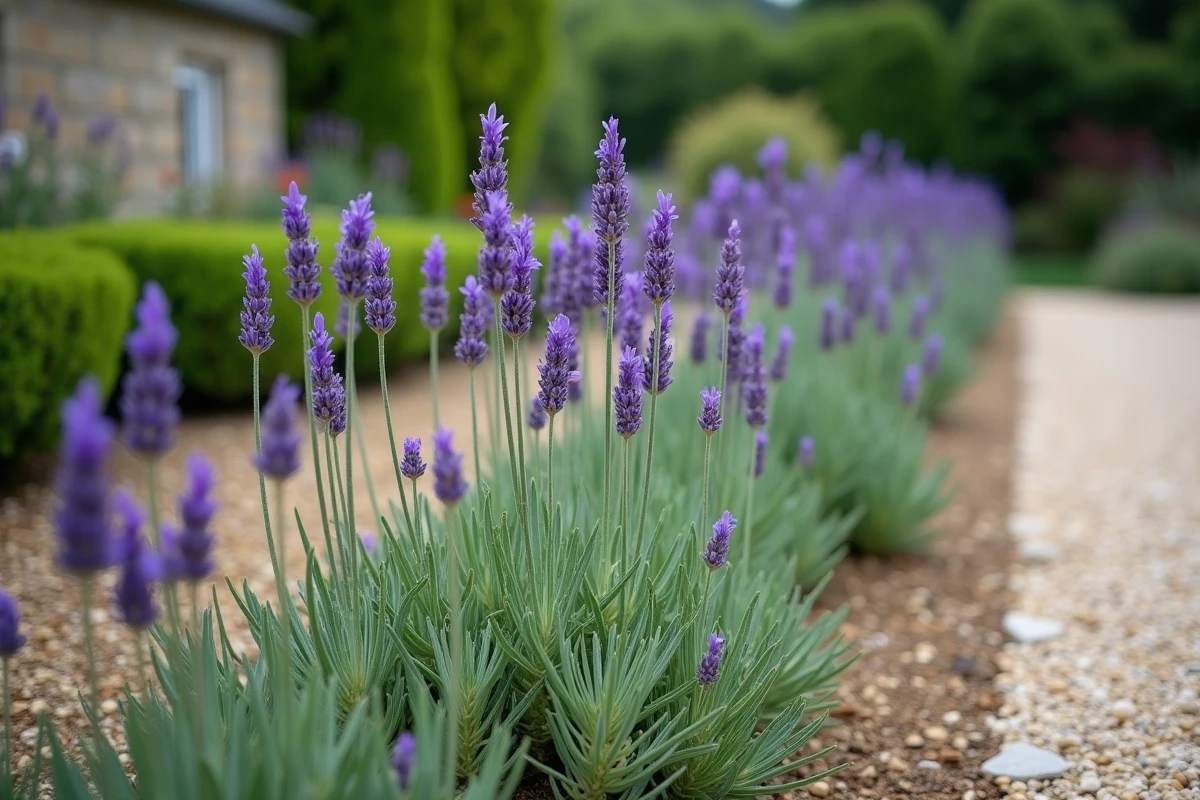
Before reducing watering or pruning, examine the base of the plant. Blackening at the collar, stems that soften for no apparent reason, or gradual yellowing may signal a health issue that goes beyond simple maintenance. Differentiating between water stress and a root infection avoids months of unnecessary care on a plant already compromised.