
The opening of a grave refers to all the operations necessary to access an existing burial site, whether for a new interment, an exhumation, or a consolidation of remains. This often-overlooked expense directly depends on the type of burial (in-ground or vault) and the associated masonry work.
In-ground or vault: the type of burial determines the opening fee
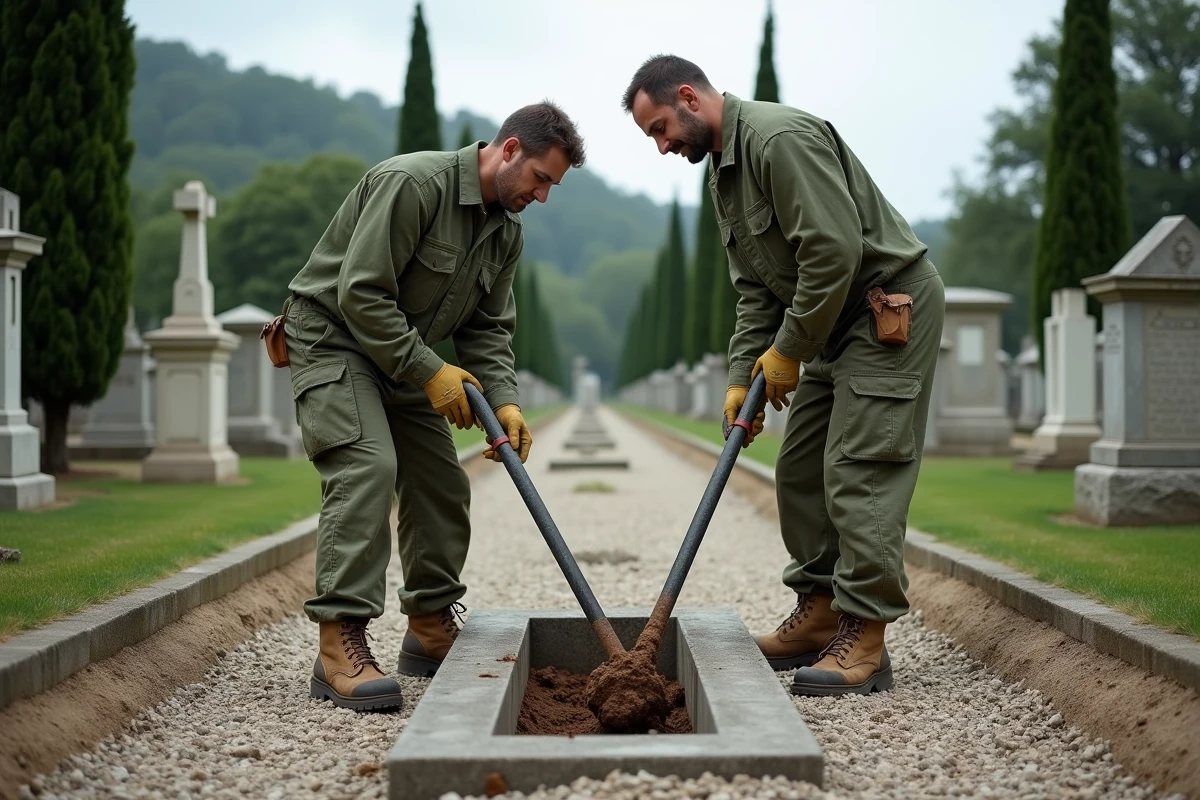
The distinction between an in-ground burial and a masonry vault dictates the entire opening budget. For an in-ground burial, the operation involves removing the tombstone, digging the ground, and then reassembling it after the ceremony. This scenario represents the highest cost, with a minimum generally observed around 1,000 euros.
You may also like : How to Recycle an Old Wooden Cutting Board: Tips and Eco-Friendly Solutions
For a vault, access is achieved by opening the slab or tombstone without digging the ground. The fee is then around 300 euros for just the movement of the slab. Some funeral monuments have a door opening system, which further reduces the bill (approximately 180 euros).
These discrepancies are explained by the labor time and materials involved. Digging in-ground sometimes requires a mini-excavator, whereas a vault only requires lifting the slab. To obtain a quote for a grave on Seniors des Infos, the exact nature of the burial is the first information to provide.
Related reading : How to Manage Your Online Academic Messaging: Tools and Tips to Know
Funeral concession: a cost linked to the municipality and duration
The opening of a grave is not limited to physical work. If the family does not yet have a concession, they must acquire one from the town hall. The fee for a concession is set by each municipality, which creates significant variations from one city to another.
Several major cities now publish their fee schedules online, with systematic updates on January 1st. Grenoble, for example, displays precise pricing grids for durations of 15, 30, 50 years, or in perpetual concession. This transparency allows for cost comparisons before committing.
Price variations based on cemetery location
Within the same urban area, the fee can vary greatly from one cemetery to another. In Paris, locations in highly sought-after cemeteries like Montmartre have prices close to local real estate logic. In rural areas, the fees remain significantly more accessible.
A point of caution often overlooked: the fee applied for renewal is the one in effect at the expiration date, not the one from the initial request. Grenoble explicitly states that renewals will follow the rates of the relevant year. Over several decades, this rule can represent a significant increase in the total cost of the burial.
Details of expenses when opening a grave
Beyond the concession and digging, several costs are added to the overall budget of an interment in an existing grave. Here they are broken down:
- Disassembly and reassembly of the tombstone: charged by the funeral mason, this item is systematic for in-ground burials and for sealed slab vaults
- Digging or opening the vault case: the fee depends on the required depth and the nature of the ground (clayey, rocky, sandy)
- Interment tax: collected by the municipality, it covers the use of the cemetery for the ceremony and varies by municipality
- Sealing intervention after the ceremony: the mason closes the burial site and replaces the monument, which incurs a second charge
All these items are distinct from funeral service costs (coffin, body transport, ceremony organization), which constitute a separate budget.

Difficult terrain and season: two factors of additional costs rarely anticipated
The nature of the soil where the burial is located directly affects the digging price. Rocky or waterlogged ground requires more time and sometimes specialized equipment. Funeral masonry companies then charge a supplement that can amount to several hundred euros.
The time of year also plays a concrete role. In winter, frozen ground complicates digging and extends the intervention duration. Some regions experience additional delays due to these weather conditions, which can generate costs for body preservation in a funeral home during the wait.
Request multiple quotes for comparison
Funeral masonry fees are not regulated at the national level. Each mason freely sets their prices, and the differences between two local providers can reach several hundred euros for the same service. Requesting at least two or three detailed quotes remains the most reliable method to control this expense.
The quotes should separately mention disassembly, digging, reassembly, and sealing. A global quote without breakdown prevents any serious comparison.
Anticipate grave opening costs in the funeral budget
Cemetery work represents an often-underestimated item in the total cost of funerals. The average budget for an interment in France is around 5,000 euros according to the most recent data, and the grave opening costs constitute a significant portion, especially for in-ground burials.
- Check the existence and expiration date of the family concession before any steps
- Consult the municipality’s fee schedule online or at the town hall to know the exact renewal fee
- Allow for a margin for potential additional costs related to the terrain or season
Some families discover at the time of death that the concession has expired, which forces them to purchase a new plot at updated rates. Regularly checking the administrative status of the concession avoids this unpleasant surprise and allows for a calm budgeting of all funeral expenses.