The maintenance of a garden in France is no longer limited to mowing and watering according to a fixed schedule. Repeated drought episodes, prefectural water restriction orders, and the evolution of knowledge about soils profoundly change the way outdoor spaces are designed and maintained. Adapting practices to these concrete constraints is essential for the success of a sustainable garden.
Water Restrictions and Garden Watering: The Regulatory Framework to Check
Before even connecting a hose, the first step concerns local regulations. Watering rules vary from one department to another and sometimes change during the season, depending on the drought alert level set by prefectural order.
The official platform VigiEau allows you to consult the restrictions applicable to your address and receive real-time alerts. Non-compliance with an order can result in a fine of up to €1,500, according to Marie France.
Some periods in the summer prohibit watering during the day, or even completely for lawns. Gardeners who plan their plantings or landscaping while considering these constraints save time and avoid unpleasant surprises. Useful resources for adapting practices can be found on the Jardinier.net website for your garden, particularly for aligning plant needs with local climatic realities.
Lawns in Dormancy: A Reflex to Adopt
During restrictions, an established lawn can be left in dormancy. It temporarily turns yellow, then greens up again with the return of rain. This phenomenon is natural and does not compromise the survival of the grass.
When watering is still allowed, priorities go to recently planted trees and shrubs, perennials that are rooting, and sensitive vegetable crops. Watering an established lawn during a drought alert is akin to wasting a rare resource on a plant that will recover on its own.
Drought-Tolerant Plants: The Duration of Establishment Changes Everything
The temptation is strong to fill beds with plants labeled “drought-resistant” and consider the problem solved. However, even drought-tolerant species require regular watering for one to two years after planting. This time allows the roots to reach the deeper layers of soil, where moisture persists.
Futura Sciences reminds us of this limitation in its analysis of xeriscaping: a dry garden only becomes truly self-sufficient after a careful establishment phase. Planting with the mindset of “zero immediate watering” often leads to losses.
Planting in Autumn to Reduce Summer Watering
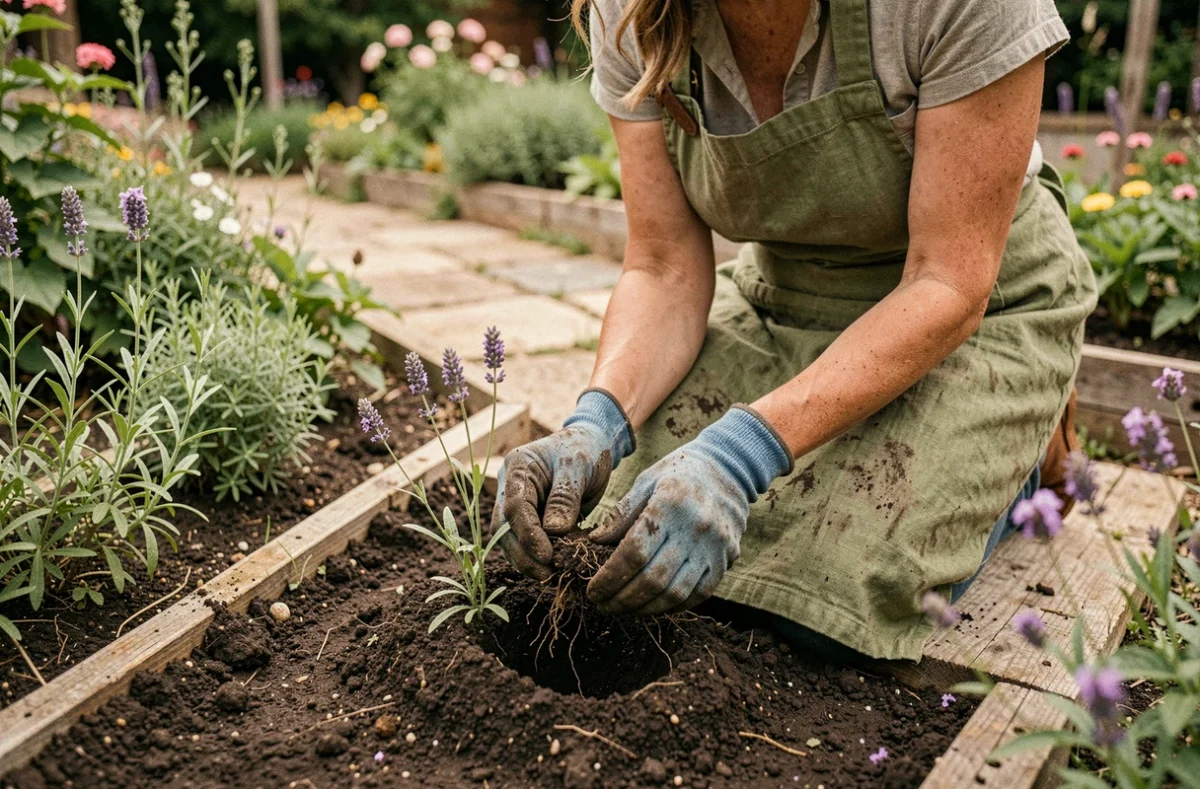
Autumn planting is an underestimated adaptation lever. Roots have several months (autumn, winter, early spring) to establish before the first summer water stress. The soil remains moist longer due to seasonal rains, significantly reducing the need for artificial watering.
- Mediterranean perennials (sages, verbena, sedums) planted in October root deeply before June and better withstand their first summer.
- Evergreen shrubs benefit from winter root recovery that spring planting does not allow.
- Fruit trees planted between November and February develop a more extensive root system, reducing watering frequency from the second year onward.
This shift in timing likely represents the most cost-effective action in terms of water savings for a garden under development.
Living Soil and Mulching: The Basis for Reduced Maintenance
A bare soil dries quickly, heats up on the surface, and encourages the emergence of weeds. Organic mulching (wood chips, fallen leaves, straw) retains moisture, regulates soil temperature, and gradually nourishes microbial life.
Thickness matters: a layer that is too thin decomposes in a few weeks without lasting effect. A sufficiently dense mulch, renewed once or twice a year, transforms the chore of weeding into a sporadic intervention.
Understanding Your Soil Before Planting
The type of soil determines the choice of plants and the watering strategy. Clay soil retains water but compacts on the surface; sandy soil drains quickly and requires more frequent organic matter inputs. Observing the ground after rain (persistent puddles or rapid absorption) already provides a reliable indication.
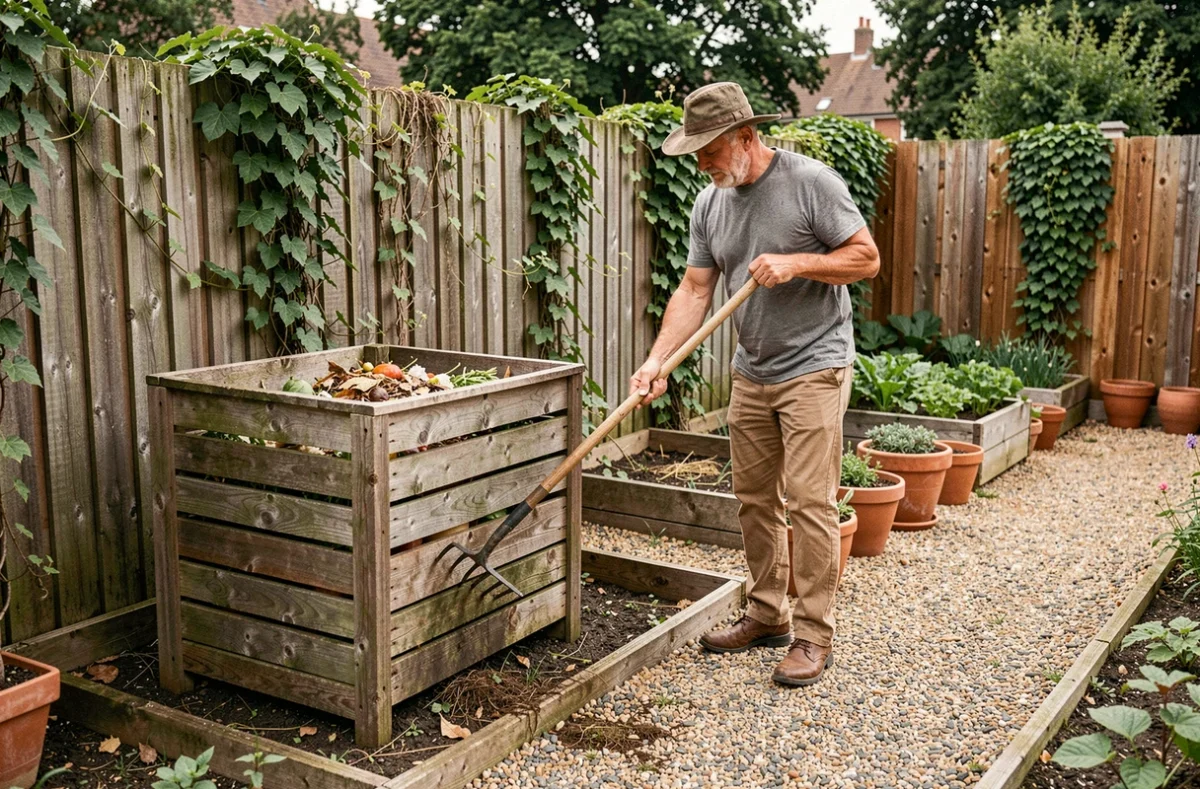
Amending clay soil with compost improves its structure over several seasons. Conversely, in very draining soil, compost acts as a water retention aid. In both cases, organic matter remains the central lever.
Garden Design: Planning to Reduce Maintenance
Competitors extensively detail circulation, hedges, and furniture. A less addressed angle concerns the structural reduction of maintenance time right from the garden’s design.
Replacing part of the lawn with persistent ground covers (thym serpolet, dwarf yarrow, white clover) eliminates mowing in these areas while maintaining green cover. These surfaces require little watering once established and can withstand light foot traffic.
- Sharp borders between beds and paths limit the spread of grasses into flower beds, reducing manual weeding.
- Grouping plants by water needs (hydrozoning) prevents overwatering one area to satisfy a single demanding species.
- Installing a rainwater collector coupled with a drip system with a timer allows watering during permitted hours without daily intervention.
These design choices are made upfront and are cheaper to correct at the project stage than after several seasons of frustration.
A garden designed for the current climate requires fewer maintenance hours, consumes less water, and withstands heat waves better. Adaptation starts with the planting schedule and respect for the soil, two parameters often relegated to the background in plant descriptions. Water restrictions are likely to tighten in the coming years, justifying these adjustments now.